“They sat down on the sand and opened their picnic. There were ham sandwiches, pork pies, hard-boiled eggs, slices of fruit cake, and a bottle of home-made lemonade. ‘This is the best meal ever!’ said Lucy-Ann, taking a big bite of her sandwich.”
Enid Blyton, the Queen of Storytelling, was also a master craftswoman. She could craft the most tempting and mouth-watering picnics in her books, that not only captivated me but millions of other young children who read these books. I would read in wonder, my eyes as round as saucer balls, wishing I could get my hands on the delectable treats she wrote about. I loved Enid Blyton for her stories of mystery, adventure, magic and wonder. But most of all, I loved them for her descriptions of food. And I know hundreds of readers feel the same way.

SHIKHA SASHI
Shikha has been teaching creative writing to students since 2016. She wishes more children would read for pleasure, and to that end tries to incorporate stories in her classes. In her free time Shikha loves to experiment with coffees, cafés and watch her son play.
Enid Blyton taught me how to put adjectives to good use. The passages in her books about picnics and the food eaten on them is a masterclass on how to make the words come alive on a page. I’m sure I haven’t read a bad or bland description or thought there was too much detail. Through her books I learnt about mince pies and clotted cream, sardines and anchovies, scones and blancmange. I knew food grown on a farm and food eaten outdoors tasted best. I understood it wasn’t the quantity that mattered but the quality.
I had once read that Enid Blyton put in a lot of thought and effort into creating these picnics and the food because she was writing in post-war Britain, where rationing was very much in effect. She wanted her readers to leave behind their grim lives for a while and step into the fantasy she had created, even if only for as long as it took to finish one of her books. However, not all her descriptions were of fancy and unattainable food. Even when her characters ate simple food– milk, bread, butter, jam and cheese – they genuinely enjoyed it and
appreciated it for what it was – fresh and creamy milk from the farm, crusty loaves of new-baked bread, pats of golden yellow butter and huge hunks of creamy cheese. You see how she excelled at the adjectives game?
The children in her picnics were young – no more than ten or eleven years old. But they always helped their parents or cook prepare the meal. They helped wash up or offered to run an errand or help in some way in exchange for the delicious meal they had just eaten.
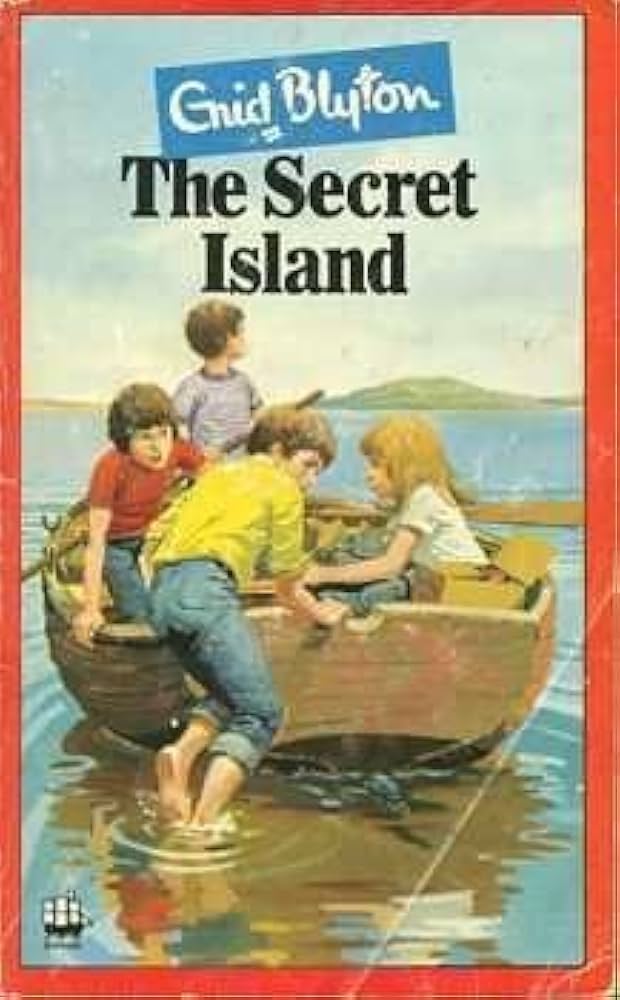
One of Blyton’s special gifts was to be able to write about all kinds of scenarios and make them believable to us, the reader. I always thought it was worth being caught in adventures and marooned on islands, valleys and old castles, if only to be able to eat all that food. She never let her characters go hungry, no matter where they were trapped or caught. Even when they had lost all their food or eaten it up, not anticipating that they wouldn’t be able to get home, she got them to find caves full of sacks, that were filled not with gold, but tins upon tins of food. One of my favourite Blyton stories is The Secret Island, where three children escape from their cruel aunt and uncle and hid on an island with the help of their friend. They escape with the clothes on their back and a few basic provisions but stay healthy (“rosy and red-cheeked”) because of a steady supply of creamy milk (thanks to a cow they manage to transport to the island) and eggs, freshly laid from their six hens (ditto).
Enid Blyton also wrote extensively about fairies and other magical folk and when they had a picnic, all bets were off! There were google buns (magical buns filled with honey), pop biscuits (biscuits that popped and flooded your mouth with honey when you bit them) and toffee shocks (they would expand in your mouth and grow bigger and bigger, until they would finally burst). Oh, the lands she created! There was the The Land of Goodies – where everything and anything could be eaten, where bushes grew sugar buns and rivers flowed with strawberry milk and lemonade and houses were made of gingerbread – and The Land of Birthdays that had every food item one would possibly need to celebrate a birthday (giant birthday cakes with coloured icing and sugar balls, ice-creams in every imaginable flavour, jellies, puddings, sandwiches).
Through Blyton’s stories, food became something more than just sustenance – it became a joyful experience, a getaway to adventure. It gave generations of readers the reason to dream, imagine and create worlds of their own. And therein lay her true magic.